
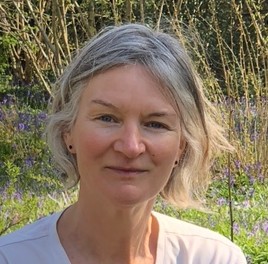
Denise Baden joins me on episode 251 of the Sentientism YouTube and the Sentientism podcast.
Denise is a Professor of Sustainable Business at the University of Southampton. She also writes both fiction and non-fiction. Denise is the Liaison Officer for the United Nations Principles of Responsible Management Education (www.unprme.org) and has been involved in integrating issues of ethics, responsibility and sustainability throughout the curriculum. Denise set up the Green Stories Project and is on the Forbes list of Climate Leaders. She was on the expert panel for the Global Action Plan, Flickers of the Future Project with Richard Curtis CBE, and in 2023 ran the #ClimateCharacters project with Bafta. Her latest novel is The Philosopher and the Assassin.
Denise Baden – Show Notes
00:00 Clips
DB: “One of the things psychology teaches you is it’s not like your knowledge affects your attitudes and your attitudes affect your behaviour. It’s actually quite the reverse. You infer your attitudes and values from your behaviour. So first you do it and then you create the story about why you did it. And I think that’s the power of story. They call it the sleeper effect: when you’re involved in a story, you get what’s called narrative transportation. You feel the character’s values and aspirations as your own. Later, you’ll often remember it as fact. So it had real effects upon behaviour. And I’ve never had anything like that with my academic work.”
02:23 Denise’s Intro
DB: “Denise Baden, professor of sustainable business. Although sometimes when I’ve been very disenchanted with how the business world has behaved, I’ve gone around calling myself professor of unsustainable business, hoping to provoke a response, but annoyingly no one notices. Also, I think of myself as a climate activist and also a writer.”
03:02 What’s Real?
DB: “It might be different to a lot of your guests, in the sense that I grew up in a very atheistic background. My dad was the kind of person who, once he had a belief, was very vigorous about it, and I think he either would have become an evangelical priest or an evangelical atheist. He did some digging and became an evangelical atheist.”
DB: “He used to run a stamp shop in Richmond, and anyone who came in and mentioned anything about religion — that would be it, he’d be off. He prided himself on having deconverted many, many religious people. I was that poor kid who’d go to school, and in religious education put my hand up and say, ‘No, you’re completely wrong. My dad says…’”
DB: “I first got beaten up when I told this kid in the playground, I must have been only six, that the puffy white clouds weren’t like anything heavenly, they were just gas.”
DB: “Not really bullied, but I think probably at that point there was some physical punishment for my views. It’s fairly robust in playgrounds. It wasn’t systematic. I’m sure I gave as good as I got. But I also never believed in Father Christmas.”
DB: “Some people say they feel sorry for me having never believed. But I quite like that my parents couldn’t bring themselves (Oh my god, children don’t listen, do they?) I don’t care, it’s out there. I don’t believe in Father Christmas or the Easter Bunny.”
JW: “Not believing in Father Christmas is actually a more contentious belief than not believing in God. I do quite a lot of workshops in schools around worldviews, and obviously I talk about our naturalistic approach using evidence and reason. The teachers and parents are quite relaxed about me talking about the fact that I don’t think there’s a god, but they’re really nervous about me talking about Father Christmas at all. It’s like a kryptonite topic.”
DB: “I suppose I’m used to not being particularly typical in that way. I was challenged when I went to university and my best friend became born-again Christian on me. Then everyone suddenly was praying for me so I didn’t go to hell, and someone spoke in tongues, and someone said, ‘Have faith and all should be revealed.’ I thought, well, I’ll give it a go, it’s an empirical question, I shall have faith. My boyfriend wasn’t very happy at the time, but every time I thought I was doubting it, I was self-censoring my thoughts, and so that didn’t last, I’m afraid.”
DB: “I’ve always been quite philosophical as well. I have always been very open to seeing a whole range of beliefs, but philosophy is different to religion. It’s a completely different thing.”
DB: “So no, I’m not a person of faith, but what I don’t want to do is deny the experiences that people of faith do experience. A lot of people have come to me and shared their tales of these moments of religious conversion, and I’m not going to tell them that hasn’t happened to them.”
DB: “But I do want to say, okay, this happened to you, but why does it mean everything the Bible says is now true? That’s the connection that I struggle with. But I don’t push it. I’m not like my dad.”
DB: “Live and let live. If those beliefs serve them, that’s fine. I think the one thing that struck me was one of my most Christian friends said, ‘The opposite of faith isn’t doubt, it’s certainty.’ So I did realize that faith doesn’t mean you’re certain that everything you believe is true. It is a leap of faith.”
DB: “I do get self-fulfilling prophecies, I come across that all the time. If you choose to believe something is true, it sort of becomes true through your behaviour and the responses it provokes.”
JW: “But not through some magical connection with the universe.”
DB: “To me, the most convincing thing about the whole Bible is Jesus Christ, because having read a lot of philosophers, even those considered very wise, they’re basically misogynist. They’re so in their time. And Jesus, as far as I know, is the only person we hear about from back then who wasn’t, and who really did have genuinely progressive values. I find that very inspirational.”
DB: “I had quite a few Buddhist friends who’ve really followed that path. I like the idea that if you want to be miserable, think about yourself, and I’ve practiced that.”
DB: “I prefer the idea of Buddhism because I don’t like the religious Old Testament good-and-bad, sin-unsin thing. I think it brings up shame and guilt, and I don’t think they’re helpful emotions. They arouse in me a defensiveness and a rebellion.”
DB: “With Buddhism, I really like the idea that you’re just not skilful yet. It’s like, yeah, you’ve been selfish, you haven’t been as moral as you can be, but (and this is Aristotle too, and many old virtue theorists) it’s something you learn by habit.”
DB: “You become honest and compassionate through a habit of behaving that way, and that feeds into who you are. It’s a process of becoming. A Buddhist won’t say what you’ve done is wrong, they’ll say it’s unskilful.”
DN: “That’s nice, you can practice that, because you’re on a journey, you can get better, and there’s not much self-shaming. Not this sense of a god who’s always watching. I don’t like that, I find it creepy.”
JW: “Particularly when there’s a binary judgment at the end where you may be sent to eternal torment.”
11:32 What Matters?
DB: “A lot of philosophers try to find a foundation for it, and they struggle. The theory of rights, human rights, is probably the best known because it’s in law, but on what basis do we have rights? What is it about us that guarantees us rights?”
DB: “They struggle with that theoretical pinning to something more, because we say ‘you do because that would be nice.’”
JW: “There’s an inbuilt assumption that there must be a foundation for it.”
DB: “If there isn’t, you’re lost, aren’t you, when you ask the questions you ask. If we have rights, what about animals? And if animals, what about insects? And if insects, what about microbes? Do foetuses have rights? Do future generations have rights? Unless there’s some theoretical basis for assigning a right to somebody, you can’t really answer these questions. You’re just floundering. I’ve listened to your podcast hoping to find a convincing answer, and I don’t think you can nail it down.”
JW: “What do we do if there isn’t a foundation? That assumption that there is one, I wonder if that might be a hangover from religious thinking, because in religious thinking there is at least an attempt at saying ultimately there is a reason, because God says, and there’s a judge, and there’s a black-and-white heaven or hell.”
JW: “Some people feel that’s solid enough to ground their morality, and there’s this trope of a religious person saying to an atheist, ‘Without God we’ll just be running around murdering and killing each other, because there is no foundation for morality.’ But I think quite a lot of people who’ve moved away from religion still have this hangover in the back of their minds that there must be some ultimate reason, and that drives a lot of philosophical inquiry. But assuming there isn’t some perfect foundation, what do we do? How can we avoid just giving up on morality completely?”
DB: “I’m not sure. The ancient Greeks had a bit to say about this, and I find it still pretty convincing. Plato said there are three parts to us, and Aristotle too: our spirit, our soul; our appetites and desires; and our social element, the fact that we know we only survive in a community, we’re not solitary beings.”
DB: “Because we can only survive as part of a community, we know that unethical behaviour that harms the community isn’t logical. When our appetites or desires are at odds with what’s best for the community, that creates a tension, and our spirit cannot be at peace while we’re acting in tension with that, because other people won’t like us and will make their feelings known… we know in our hearts that if we all behaved that way, we wouldn’t survive. Our spirit understands that.”
DB: “That tripartite view of human nature, I think it’s a nice way of looking at it because it just makes sense. We’ve evolved to be social beings. It’s been shown, if you do neural imaging of people when you show them unfairness, this part lights up. Even toddlers, if you try barging in front of them in a queue, or giving someone more than them, they know that’s not right. We seem to be hardwired with a sense of fairness and justice.”
DB: “I think the sense of harm is at the centre of it… If what you’re doing causes harm, then it’s an ethical issue.”
DB: “Sometimes you can’t avoid causing harm. But it always comes back to the same thing, like the utilitarian idea of the greatest good for the greatest number.”
DB: “Who do you count in the greatest number? Dogs seem to be happier than humans. Should we give them priority over us? They bound around and roll in the grass, all legs in the air, waggy tails. Maybe we should have a world full of dogs and serve their needs.”
JW: Probably, because they have a higher potential utility. So yes, dogs are the utility monsters.”
DB: “You run up against that the whole time… I bring in the psychologist in me… I like the ideal of universal love.”
DB: “I don’t mind the idea of God, funnily enough, and I do believe in prayer. I’m actually very good at praying, I get a sense of something going on when I pray. I don’t say it makes sense… it doesn’t have to. I think experience trumps everything sometimes, for yourself.”
DB: “What would someone who loved everyone equally do in this situation? It’s quite easy when you’re a parent with more than one child. They might be very different, but you love them equally.”
JW: “Well, I have a favourite one. I’m joking, I’m safe because I know they will never watch or listen to this… I’ve seen their Spotify Wrapped for podcast listening, and unfortunately Sentientism just isn’t on the list, so I’m pretty safe. But I am joking. I do love them equally.”
DB: “My kids don’t even like it if I pick a favourite. When I wanted to manipulate them, if they were really arguing, I’d pointlessly pick on one of them, and then the other one would come to their defence and the problem would stop.”
DB: “We all just feel better when we’re acting ethically, and that’s an observationally supported finding. When we’re acting ethically, we feel more at peace and we feel better in ourselves. There’s a selfish reason.”
DB: “And then there are a number of tools to help you decide what the ethical thing is. Some go back to various philosophers. Someone told me, after a drunken night down the pub, that they think of their actions as throwing a stone into a lake, and what they do is the ripples, and they try to make sure those ripples are overall good ones.”
DB: “In my latest novel, The Philosopher and the Assassin, I go through all the different tools and what answers they give to a seemingly intractable dilemma. I have great fun doing it, because I love holding forth on philosophy, as you’ve probably already realised.”
JW: “There’s a really interesting tension. The idea that ethics comes from community and the effectiveness of our community is important, but it leaves open the question of what about people who are outside our community, the outgroup. We know that community-driven behaviour can be very harsh to out-groups.”
JW: “There’s a tension in the psychology, too… yes, we get warm fuzzies from being kind and compassionate to those around us, but we also get positive feelings sometimes from being aggressive to the out-group.”
JW: “So there’s this tension between community and the psychology that can drive positive morality, versus the aspiration for a much more universal view, driven, as you mentioned, by concern for harm… not just harm to the in-group, but harm to the out-group too.”
JW: “I do think that harm and moral consideration for others is probably the raw material of ethics, and I’m quite comfortable drawing a link between the good and bad of experience and the good and bad of ethics. The reason it’s morally bad for me to harm you is because that feels bad to you, and I think there’s quite a strong link there. If there is a foundation to ethics, it’s something to do with that.”
22:25 Who Matters
DB: “That is a difficult one, because I think we’re not perfect beings, and I’ve certainly found, in psychological experiments and in my own experience, that if you try to be better than you are, you can have a backlash.”
DB: “Even as a kid, if I was made to share, and I’d be suddenly generous, then the next time I had to do a generous act, I was just like, ‘no, I’ve done mine.’”
DB: “Like most people, I find it very easy to be good at things I naturally enjoy anyway… I’m very good at not consuming too much because I don’t really like shopping anyway, so I’m very green and environmental in my consumption.”
DB: “But when it comes to things I really do enjoy, it’s much more problematic when they contradict the ‘who matters?’ That’s a journey I think we’re all on.”
DB: “When it comes to animals, I think anyone who’s got a pet just knows it’s ridiculous to say they have no soul. I remember the first time I came across Descartes, I thought, ‘you’re an idiot. Of course animals have souls.’”
JW: “Well, the only tuning is I don’t think souls exist at all… But I get what you mean.
DB: “They feel pain, they care about themselves, they feel emotion, they age with you… So I’m calling that “soul” — they have a sense of what they want and what they don’t, and it matters to them.”
JW: “So were you an animal person as a kid? Did you have companion animals? How did you think about non-human animals as a child?”
DB: “I loved dogs. Cats I found a bit more problematic because they’re hunters. I don’t like any animal in a cage. We had a hamster, but we let it run free a lot of the time. When we had a rabbit, we let it run free… I just don’t like the idea of animals in cages, I think that’s awful.”
JW: “I don’t think they do either.”
DB: “Every time you learn more about animals, you learn that more and more of them have feelings and personalities.”
DB: “A friend of mine, he’s quite a big wig now in the world of animal behaviour and psychology, did work on rats, and used to let his rats run free in his room. I remember visiting him, and I really didn’t want to be the one who jumped on a chair screaming, but with the way they darted and their big, long tails, I was that person, I’m afraid — shame to say, till I got used to them.”
DB: “His research was challenged because he was getting such better results, and they thought he was making up his results… that’s a death knell for any scientist or psychologist. But he could prove it was because his rats had a more enriched environment. Then you started hearing about enriched environments.”
DB: “Learning that every rat had a personality, from him, made it really difficult when my flat was infested with rats and I had young kids… At first I thought it was mice, and my friend really took the mick… I got a bottle and put a little ladder in it, from the mousetrap game, with a bit of cheese, hoping to trap them humanely.”
DB: “When the rat man came, I put that little incident in Habitat Man, he really took the mick, showed me this great big rat, and this little bottle, and I found it really disturbing that you could just go around assassinating all these sentient beings.”
JW: “One of the things that’s come through a lot of conversations is some people think you have to like or even love animals to care about them, and I just don’t think that’s a connection we need to draw. The animals don’t care in that sense. It’s about a basic respect for them as a being that matters to themselves, as you said. That’s what really matters. It doesn’t really matter whether we feel affection or fascination for them.”
DB: “It’s difficult, the more you know, the more careful you are… One of the things that provoked Habitat Man, it was based on a real-life green garden consultant, just before lockdown. He’d given up work and retired early to help make people’s gardens wildlife-friendly. He used to be a supervisor to Chris Packham.”
DB: “He told me that when you use flea powder or worming treatment, it affects all the microbes in the soil. He was really upset that I’d followed advice to poison a stump… ‘why would you do that, it’s completely unnecessary, you’ve now poisoned the entire soil.’”
DB: “He said, no, we’ll atone, we’ll let this tree just rot down here, and you can use all these logs you were going to burn but can’t now because you’re in a low-smoke zone, and that will provide a nice habitat, a refugium.”
DB: “I suddenly realized my garden was alive in ways I just didn’t know. It wasn’t just about pretty birds tweeting and the things I could see, like the squirrels, it was right in the soil. The soil was alive, and it would give rise to microbes that the snails liked, that the frogs liked, and so it goes on.”
DB: “It’s like when you go to an art gallery ignorant… and then you’re with someone who can tell you the history of it, how they did it… and suddenly next time you go to a gallery you get so much more from it. I found my understanding of the world was so enriched.”
DB: “But it also caused a little more pain… it literally hurts… like watching something, I think it was Fairly Legal, where a supposedly cute, frivolous lawyer throws someone’s phone in the river because she’s upset with them, and that’s supposed to be funny. I’m thinking, no, there’s toxic chemicals in that, and I now know exactly what harm they’re doing to wildlife.”
DB: “You can end up getting a bit judgy, with a permanent furrowed brow, and that’s not fun either.”
DB: “I do find sometimes quite a bit of tension between the knowledge I’m gaining and living in a world that’s very different, and also knowing that when you take it to its logical conclusion, you can end up in quite a dangerous place… that I’d be better off not existing at all, given the harm I do, and that humankind shouldn’t exist at all.”
DB: “In a time when we’re going through really big mental health problems and eco-anxiety, you want to avoid that message.”
DB: “You really need to avoid shaming people too much, because you can get a backlash. No one likes to feel they’re behaving immorally, but they do want to eat meat and fly and I want to do all these things, and they are in tension with what I feel to be in the best interests morally.”
DB: “I feel I’m on my own personal journey, that I can gradually expand my care and compassion for the world, but if I’m asked to do it too quickly, there’s a backlash.”
DB: “I never even liked beef till someone told me it was bad for the environment, and suddenly I had a yearning for it, it became a treat, something I was being denied.”
DB: “I’ve been on and off vegetarian, vegan… I’ve gone through such a journey on that… I’ll go all vegetarian and feel good because I like animals and care about the environment.”
DB: “And then I’ll be at a barbecue where everyone’s stuffing their faces with meat, and then it’s all being wasted, and I think, well, I can’t let that go to waste, that’s disrespectful, so I’ll eat it… and then I’ve fallen off the wagon, because actually I secretly really like it, and then I’m back on it.”
DB: “It’s tricky. I like the idea of myself, and humankind as a whole, being on a sort of spiritual journey, I’ll call it, to be better.”
DB: “I don’t think it requires a god, actually, to try to always be a little bit better… you train up a child… gradually raise awareness without flooding people with the harm they’re doing, because I think that can be quite dangerous and not very compassionate either.”
JW: “The more your moral scope extends out to all beings who can experience harm, I find that almost a freeing experience… a joy to recognise that, a freeing from social norms and psychological constraints…”
JW: “But at the same time it is taking more weight on, because the broader your moral scope, the more suffering you see, the more exploitation, the more harm.”
JW: “That can be difficult, because we didn’t evolve to even think about that stuff… we evolved for a different context, more narrowly social, within our own world. That can be a weight to take on, and I think part of the balancing is to make sure we don’t just see the negative… because if you start to think there’s no way you can exist without causing harm, that means your existence is a negative thing.”
JW: “You’re missing out on all the positive potential of the things you can do in the world… we all do wonderful things too, and many sentient beings have very positive experiences. And we can help enhance those, and we can also offset the negatives of others.”
JW: “As we’re thinking about intervention and change, we have to recognise the nature of human psychology and sociology and politics in how we work those through.”
JW: “Many of the people I’ve been talking to are deeply involved in thinking that through, because often the science and philosophy are very straightforward, but the real problem is human psychology, sociology, and political will.”
JW: “One thing I think can help, particularly because you talked about, even from quite a young age, including non-human animals at least to some extent, in your moral scope…, is the problem of food and animal agriculture and exploitation. It’s the big beast in the room that blocks the natural sentiocentric compassion most humans have, because we live in a society where it’s just so normal to farm animals for food and clothing and use them for entertainment and laboratories.”
JW: “One thing is to almost stop thinking about ourselves, for a moment, as individuals and just think about those systems. When we think in a clear-eyed way about the end-to-end process. For example, of dairy farming, from the artificial insemination through the calf separation through the different stages of the process through to the slaughterhouse… and we don’t think about ourselves at all, just think about that process and that system, and about the harm it’s doing, from the perspective of the beings going through it… I think that’s a much easier path to take, because we can evaluate those systems and think about them independent of our own choices.”
JW: “Obviously then the next step does come back to thinking about the ripples we send out, but I think it can be an easier place to start, because ultimately it’s the systems and the politics we need to change.”
JW: “Yes, we as individuals have a role in influencing that in a variety of ways, but starting with the systems can sometimes be psychologically easier.”
DB: “It would be helpful, because when the whole system is set up to incentivise an unethical behaviour, it takes a lot of effort to swim against it, and there are all kinds of psychological processes going on.”
DB: “What I’ve found interesting is some of the people you’d think are the worst, in terms of their attitudes, are that way because they’re so highly empathetic… like my dad.”
DB: “God bless him, he’d say nothing could ever happen to anyone that wasn’t their fault… I later learned there’s a name for it — “just world syndrome,” where he believed that if we live in a just world, if anything bad happened, they must have deserved it.”
DB: “So we’d be watching, say, an earthquake or a volcano where loads of people had been killed, and he’d say, well, it’s their own stupid fault, I wouldn’t live there… It went that deep.”
JW: “That’s a very commonly held fallacy, but it’s quite unusual for an atheist.”
DB: “It’s there to protect him, because actually he’s a deeply sentimental and kind man… he feels other people’s pain, so he’s created a whole armour to protect himself.”
DB: “I realized, quite late in life, that I do the same. I’ve got this sort of black hole in my head where everything bad, quite often fictional, like Oliver, or the horrible life those Dickensian youths led, or all those young men in World War I, or all those animals in an abattoir… all these horrible things, and my feeling of empathy is so much I can’t bear it.”
DB: “So it’s in this lock box, and I just don’t go there. That avoidance and denial can enable these things to persist.”
DB: “But it’s not coming from an uncaring place. Actually, it’s coming from a place of caring too much, because… if you’re very empathetic, there’s only so much you can open yourself to the suffering of the world.”
DB: “I think we’re all very different, so sometimes we don’t understand when other people don’t respond the same way we do to arguments that would move us, because we understand and feel things differently. So I do think there’s a real case for understanding.”
DB: “One of the things psychology teaches you is it’s not that your knowledge affects your attitudes and your attitudes affect your behaviour… it’s actually quite the reverse. You infer your attitudes and values from your behaviour: first you do it, then you create the story about why you did it.”
DB: “It’s really hard to eat healthily and ethically in today’s environment, unless you go to a proper supermarket and have time to properly cook. You can buy vegan processed food, but if you just go to your local neighbourhood shops, there’ll be rows and rows of fizzy drinks and processed meat, but not one thing that’s actually healthy.”
JW: Y”ou will find nuts and pulses and beans and legumes and tofu.”
DB: “Not in your local corner shop. You have to go to the supermarket for that.”
JW: “And you still need to know what to do with them. I want to drop this in quickly before I forget — there’s a brilliant podcast recommendation called In a Nutshell, really good on nutrition. It’s run by two UK GPs, Clare Day and Daisy Lund. It’s a really good listen. They cover all the medical and nutrition aspects, and there are recipe ideas at the end of each one.”
DB: “I think you’re completely right, we need to look at the systems. You can’t go wrong with that. If you address the systems, make them more ethical and sustainable, with greater plant-based options, there’s been loads of brilliant suggestions from your previous guests along those lines — making it the default, and so on.”
JW: “A lot of your work — sustainability, environment, climate… concerns that go even beyond sentient beings… Someone like me cares about the environment because of its impact, the ripples of the environment on the quadrillions of sentient beings that depend on it… I think it’s very unlikely a tree could actually experience harm itself… I wouldn’t want to cut down a tree, but I do see a deep difference between putting a knife into a pig and putting a knife into a carrot.”
JW: “The core of the modern environmental movement is actually quite human-cantered… about pretty nature for us to experience aesthetically, wanting reliable temperature ranges, clean water, predictable weather… all important, but really human concerns rather than genuinely direct environmental concerns.”
DB: “I think that’s changing rapidly. People have discovered, for example, that trees don’t exist in isolation — the ‘wood wide web,’… all the mushrooms and fungi connect them, so a forest exists as an ecosystem.”
DB: “We’re much more aware the bacteria in our gut is a good thing, and that’s coming to us through health influences, people selling probiotics and so on. But the deeper implication is more interesting. You are part of a community, most of the life in your body isn’t human, it’s bacteria.”
DB: “We’re getting a sense that we are ourselves a community. That’s one of the reasons I run the Green Stories Project, which runs a series of competitions to engage writers, because if you want to spread the word, you engage communicators.”
DB: “We’ve run 21 free competitions asking them to address various environmental issues and put them in stories that reach mainstream audiences, not just climate fiction. One was called Microbes to the Rescue. We did another one, Clean Versus Green, because we had a health scientist, following COVID, worried people were over-cleaning and not understanding the difference between good and bad bacteria and viruses, actually causing more harm than good.”
DB: “We wanted to address these misinformations through stories, and we got some lovely ones… one from the point of view of a girl whose dad has gone crazy, coating everything with a ‘kills 99% of bacteria’ product (these claims are rubbish, by the way, and if they did work, they’d be dangerous.) She shrinks down to the size of a bacterium and finds herself surrounded by friendly bacteria saying, ‘Stop your dad before he kills us all.’”
DB: “There was another one where there’s a couple in couples therapy, she’s OCD-tidy and he’s messy, and you think he’s the one who has to learn his lesson, but actually the roots of her cleaning everything turn out to be some sort of trauma that’s led her down an unhealthy path… Everything washed at 90 degrees, which destroys the fabric, huge bills, not good for the environment, and herself over-showering, stripping her skin of the friendly bacteria that keeps it healthy.”
DB: “That ties into a sustainable-hairdressing project I run, where I’m trying to educate people that the friendly bacteria doesn’t just exist in our guts, it’s also on our skin. Standing under a hot power shower with harsh chemicals, shower gel, or shampoo is really washing off all the good bacteria that keeps your skin healthy and young.”
DB: “I think these things are beginning to permeate… and gradually our awareness is growing that we are ourselves a community, a web of life… in a really amorphous way, that’s seeping into our consciousness and raising it.”
DB: “The implications could be huge. Certainly, when I think of my own behaviour, how it’s changed since I’ve learned so much. I just walk more lightly on the earth, I take more care.”
JW: “That sense of interconnectedness… people are understanding it more deeply, it becomes harder and harder to see ourselves as disconnected atomic individuals, we’re just part of these webs. But it still leaves the question open as to why we care about that broad eco-environmental web… is it ultimately still a selfish, anthropocentric concern, that we care about it because we are connected, or is it broader, for the sentient beings, or even broader, for the biosphere?”
JW: “Do we actually care about an individual blade of grass as a moral being in the same way as a dog or a pig or a fish or a chicken or a human?”
DB: “It’s a really interesting question, one I’ve tackled in the context of business ethics, actually… I used to teach courses on corporate social responsibility, and maybe 15 years ago I was quite starry-eyed about it… Corporate social responsibility is good, there are win-wins, customers like ethical companies, using fewer materials saves money.”
DB: “Then I began to realise the implications of that: well, if it’s not a win-win, then we won’t do it. Things like sweatshop labour… that’s not a win-win, you save tons of money by outsourcing labour to conditions you wouldn’t want to work in, and there’s no way that, if you’re doing it for the win-win, you’d address that moral issue.”
DB: “So I felt like this corporate social responsibility movement had won the battle but lost the war, because we’d framed it in instrumental terms rather than in moral terms — which meant these other things just weren’t being looked at.”
DB: “We’re not going to care about the environment or people or animals if it doesn’t make sense profit-wise.”
JW: “They’re just seen as resources or objects to be used.”
DB: “It results in a form of greenwash, where you think you’re dealing with the problem because they’re going on about their responsibility credentials, but it’s actually worse than doing nothing… thinking you’ve solved a problem when you haven’t, and the implications of that are so harmful, especially existential, when it comes to climate change… worse than doing nothing at all.”
DB: “To come back to your question, I was going to say ‘does it matter why we care?’ I think maybe you’re right, it does, though I’m not sure where that takes us, apart from a sense that this consciousness-raising doesn’t fit neatly into a box of self-interested versus other-interested.”
DB: “Maybe we’re falling into our own trap there, putting things in boxes… this is the self-interested bit of me, this is the altruistic bit. Did you read the anthology Stories from the Microbial World?”
JW: “I read the first couple. I loved the first one, about the organs, the human… looking for sanctuary.”
DB: “The whole goal of those stories — I loved it, because some give us really good reasons to care about, say, tiny microbes, because they break down our environment, they’re the reason we haven’t got trash and poo all over the place, it’s being broken down, they deal with our sewage, they can clean up pollution… absolutely essential. So it provides self-interested reasons, but there are also some stories that anthropomorphize — probably a term you’ve got a problem with.”
JW: “I think anthropomorphizing is appropriate when the other beings actually do have those characteristics. I don’t think it’s always a bad thing, as long as it’s done appropriately.”
DB: “Yeah, so we try to take both approaches. One showing all the benefits they do, others giving a sense of selfhood and agency and consciousness to these microbes and tiny things which are part of the web of life.”
DB: “I’m sure just as, every time you go deeper, you discover, fish aren’t these mindless things… they do have memory, they make relationships and come back to them, and then you go even deeper… they also care about each other… it just gets harder and harder to discount anything.”
DB: “So I thought starting from the bottom up, tapping both elements, was probably the way to go, and hopefully it’s quite entertaining as well. I’d really welcome your opinion on those stories, I think they’re lovely.”
JW: “Where I’ve got to on it… comes back to your core idea of harm, that we should have moral concern for any entity that can be harmed, or that can experience harm, whatever they are. The ability to experience harm is basically sentience.”
JW: “It’s very similar to the concept in the Dharmic religions described as ahimsa, do no harm… it never meant do no harm to humans, it meant do no harm to any being that can be harmed.”
JW: “Because of this naturalistic, evidence-and-reason approach to understanding the world, you absolutely have to keep going deeper… recognizing these richly interconnected webs.”
JW: “You might enjoy my conversation with Justine Karst, who did some of the work around the wood wide web. On the one hand she’s tempering some of the overexcited media around it, but there are some fascinating stories there.”
JW: “You have to recognise those connections, the ripples that go out, the fact that we’re all part of those webs. But I think it’s important to hold on to the fact that the reason we care about those webs, and want to understand and care for them, is ultimately because of a care for the sentient beings that can actually experience the harm.”
JW: “That’s the moral core… because if we don’t do that, there’s a danger of a sort of ethical flattening, where almost everything matters, so in a sense nothing matters differently.”
JW: “I’ve had conversations with people who will bite the bullet and say there’s no difference between cutting a blade of grass and cutting the throat of a fish or a pig… something’s gone deeply wrong there.”
JW: “If you don’t recognise the distinctive moral salience of the capacity to experience harm, something’s broken in your ethical system, even if you’re claiming a sort of perfect consistency.”
DB: “Have you read, or listened to the audio version, which is brilliant, of Robert MacFarlan’s book, Are Rivers Alive? I’d be really interested in your view, because he comes to the conclusion, yes… and not just because of the life that lives in it… he brings all the poetry and lyricism he has, and I was interested in what you thought of that.”
JW: “I would love to read it and I will let you know. I guess my first response would be, I don’t think being alive is morally relevant… I’m not that interested in who’s alive and who isn’t.”
JW: “It’s a fascinating scientific topic, it’s a fuzzy boundary, even the scientists haven’t fully agreed what being alive is, and you can ask questions about viruses around it.”
JW: “I find it fascinating, but I don’t think it’s morally salient, which is why I come back to the idea of sentience. My question is, does he, in the book, claim that the river can experience things. Is it a feeling being as well as being alive?”
DB: “I don’t think he ever specifically says so. In all the poetry, somehow you get a sense that maybe it does, but he never says so.”
JW: “I will put it on the reading list and let you know what I think. My gut feel would be… it’s probably taking the anthropomorphism a little too far…”
JW: “We need to recognize that the average human today is much more keen on giving rights to rivers than giving rights to pigs.”
DB: “That’s because we like swimming in rivers and looking at them, and we like eating pigs… It’s motivated reasoning, isn’t it? It completely is.”
JW: “Quite a lot of human intellect goes to that sort of motivated reasoning.”
55:42 Making a Better World
JW: “… There are some good things business can do: innovation, new ideas, solar and different types of energy, plant-based proteins, food innovation…”
JW: “But at the same time, there’s some pretty bleak stuff going on too, because those very same industries have driven many of the problems in the first place, and there’s an enormous amount of greenwashing and ethics-washing… and even explicit disinformation and misinformation that’s extremely well-funded.”
JW: “The same PR firms, lawyers, and lobbyists who worked for big tobacco took their playbooks and sold that work to big oil: ‘we can delay, we can confuse, we can deny’ and they’ve taken exactly the same toolkits and are using them for big animal agriculture too.”
JW: “They deserve gold medals for marketing, they are using their understanding of human psychology, sociology, and politics to craft things to their own advantage, in a situation where the vast majority of their consumers are absolutely horrified at the core processes that go on in their operations.”
JW: “It’s this fascinating balance — you’ll see so many examples in the environmental space where corporations play on the idea that it’s the system, not the individual, because that encourages the individual to keep buying their products.”
JW: “But when they do talk about individual focus, they want individuals to do tokenistic virtue-signalling type things rather than address the real core issue… hence people giving up plastic straws for the fish while still buying fish… or feeding seaweed to cows instead of recognising we should be switching to plant agriculture… What’s your sense of the role of business in this dynamic?”
DB: “I’m really glad you asked that, because at the moment I’m supervising a DBA student. A DBA is like a PhD, but for someone actually working in business, usually very mature, probably at a high level in their work, who wants to translate what they’re finding into research that could be shared.”
DB: “She runs executive leadership events for sustainability, and I’ve read so many stories of top business leaders. I’ll tell you a typical story — a top business leader at the top of their game, everything’s right in their world, is invited to this event, and expects it’s going to be ESG, EDI, CSR, basic sustainability metrics. Instead, someone scares the pants off them… about the climate crisis.”
DB: “She asks them what sustainability means to them as a human being, not as a business leader, as a human being. Then they sit under a tree quietly, no phones, nothing, for 30 minutes… people who’ve probably never stopped to reflect, for a moment, without their phones, because they’re very productive.”
DB: “Just the blue of the sky, the leaves rustling, and the words echoing in their head… They come back to the group and often can’t even share what they said… They just cry.”
DB: “She’s churning out hundreds of top executives who want to do everything they can. When I asked her what’s next, what happened, she didn’t have that much to report, because if the CEO of a public limited company wants to do anything that doesn’t involve profit maximization… not profit sufficiency, maximization, they won’t last long, and if they do, their company will be subject to a hostile takeover.”
DB: “Part of the reason she wanted to do a DBA was to bring the academic world in… how can we solve this?”
DB: “This is something I’m working on now… grandiosely called, in my head, a 20-piece jigsaw puzzle to save the world. What I like about the idea is that the corner pieces are the institutional bits where we’ve locked in unsustainable, unethical behaviour.”
DB: “One of them is business, the corporate form, which is no longer fit for purpose.”
DB: “The jigsaw is you have an image on the cover of the flourishing society you aspire to build, with renewable energy and low-carbon food and transport in the middle… but the edge pieces are the institutional structural setup that’s locking us into this current way where what we’re doing is so tokenistic.”
DB: “What happens if all corporations were now benefit corporations, where their mission is sufficient profit to enable social good rather than maximum profit? What then happens to the stock market… our pensions, banking, everything else?”
DB: “These are tricky problems. Doing sustainable and ethical behaviour is easy, but having incentives in place that allow us to do it systemically is really tricky.”
DB: “I’ve got a several-stage plan. I’ve been running a monthly newsletter on LinkedIn called Creative Climate Communications, and that’s switching focus from January to this 20-piece jigsaw puzzle. I’m going to be looking at all the pieces, inviting people to weigh in on what I’ve suggested.”
DB: “For the really tricky ones, we’re going to run events inviting people from finance, banking, pensions, and economics… we’ll ask them to imagine this flourishing world, do some what-if exercises, and then tell a story about what that might look like, because stories free the imagination from the constraints of now.”
DB: “Then we’ll do a bit of work with the jigsaw… What are the different pieces of the puzzle… how do they affect each other… really bring in these people who are part of the problem to be part of the solution.”
DB: “What I’ve realised from reading these accounts is these aren’t necessarily evil people, they’re trapped in a system that doesn’t allow them to do anything other than the easy pickings, the win-wins, and that’s not enough.”
DB: “Jigsaws are great because they’re more fun, and you can get them in toy shops and care homes and educational establishments… with an accompanying book to show how we might do this, focused not on the problems but always on this beautiful society we want to get to.”
DB: “I’m channelling a bit of Rob Hopkins there… How to Fall in Love with the Future… I think that’s a really nice approach, because it’s focused on what we like rather than what’s wrong with what we have.”
DB: “That’s the project for 2027, because business as it’s currently structured can’t help us. There’s no point pretending it can, and the more it tries to show it can, the more harm it’s doing.”
DB: “It’s like thinking you’re curing cancer with some homeopathic remedy… am I going to upset everyone who believes in homeopathic remedies?”
JW: “It just doesn’t work.”
DB: “If you think you’ve cured a problem, you haven’t, you are the problem.”
DB: “I think small businesses can do it, social enterprises can do it. I spent a bit of time in Cuba looking at their system, where it’s mostly either social enterprises or big businesses partnered with government… private public limited companies are not allowed… and they’re making it work despite the most brutal embargo that’s ever existed.”
DB: “They’re somehow managing to hold their own in education, health, culture, sport.”
JW: “It’s a shame about the authoritarianism, but you can still pick up some messages from different models there.”
DB: “When I went there, what was very interesting about Cuba is that no one seemed that keen on having a multi-party representative democracy, and when I asked why, I found out the leaders are elected, but it’s just one party… every policy is poured over by the popular councils, which everyone’s part of, like citizens’ juries, where every area scrutinizes any policy proposal.”
DB: “It’s actually quite a radical form of participative democracy, because most proposals are amended on the basis of public feedback, so they do feel they have a voice.”
DB: “That’s not something America will talk about, or public discourse will talk about, because they’re anti-capitalists, a threat to the whole system if it shows it can work.”
DB: “I’m not saying their system is perfect… their media isn’t entirely free… I spoke to one of the media outlets there, and they were really critical of the government, and being recorded, and they didn’t seem that worried by it.”
DB: “Then again, our free media here isn’t unproblematic. I think media is one of these problems, whether state-owned or privately owned. Look at X, and who owns Fox News… I’m not sure we’re in a position to throw stones.”
JW: “In a way it requires a complete rethinking of economics and how businesses operate. Some of my guests think capitalism is intrinsically exploitative and we need something different; others think we could have a more compassionate form of capitalism that could reflect people’s values.”
JW: “There’s this weird dichotomy… companies are just another form of cooperation, really, and they should be reflecting the values of, to some degree, their consumers who choose their products, their employees, their management, their executives… these are human beings, but they also should reflect the values of their board and shareholders, who are ultimately are quite often just ordinary people, like you and me, or anyone with a pension.”
JW: “All of those stakeholders… the communities they operate in, the governments that regulate them… have a normal range of human values, and generally, on average, we’re quite well-intentioned people.”
JW: “But because of the structure of the system, there’s this stripping-out of all the morality, and the company is told the only thing that matters is maximizing profitability. Sometimes we inadvertently support that, because everyone wants their investments to do well, or their pension to do well, or their products to be cheap.”
JW: “There’s this strange disconnect… on the one hand it can feel very frustrating, because those powerful systems are extremely hard to change, but there’s hope there too… that most people do actually care. If we could find a way of reflecting even the default human values through the systems, things wouldn’t be perfect, but they’d be much better than they are now.”
DB: “I’ve got some pieces of the puzzle I’m quite confident in… For example, I’m very excited by citizens’ assemblies. Where I live we had a climate assembly, and I was part of it at the beginning, and I met people who’d taken part, and they were so energized and inspired by the process.”
DB: “In my book The Philosopher and the Assassin, I have a murder in a citizens’ assembly on climate, as a story within a story, which lets me showcase the way citizens’ assemblies can almost take a stakeholder point of view, with each character relating to different policies differently depending on where they are… a lovely way to showcase all the different kinds of policies, and put the process in front of people in a way that’s entertaining.”
DB: “A citizens’ assembly… is where you get normally about a hundred people, randomly chosen to represent the makeup of society, to discuss a topic, informed by experts, not vested interests, and they’ve been shown to give rise to really thoughtful policies.”
DB: “The issue has been they haven’t had actual power… in Europe there are some exceptions, but mostly they just have power to recommend, and there are campaigns… politicians running a campaign to replace the House of Lords with a house of citizens.”
DB: “I love that idea, because I came across it first in Cuba… but it really does its job, and I also came across it locally.”
DB: “Having taught stakeholder theory as part of corporate social responsibility, you see what a load of rubbish it is.”
DB: “I had another PhD student, from Nigeria, looking at Shell in Nigeria, and the fact is only the powerful stakeholders have any say.”
DB: “The rest of it is just theory: “oh, businesses should attend to every stakeholder, the community, the environment, the customers, the shareholders”… but really it’s just the shareholders. I don’t even want to teach this, because it’s rubbish.”
DB: “So if I were going to create my jigsaw, citizens’ assemblies would be a corner piece, because I don’t think our representative democracy, with four-year electoral cycles, where people are fed information by a biased media, lobbied by people paying their marketing budget in their own interests, is constitutionally capable of addressing something like climate change to a sufficient degree.”
DB: “I also like the idea of taking that into business. Let’s make stakeholder theory a reality. Instead of a board of directors, you have a stakeholder board. We have examples in Germany, no policy can pass unless it’s been ratified by workers’ representatives.”
DB: “Faith in Nature, they have nature on the board… I love that.”
DB: “Let’s take this participative approach into the heart of business, get rid of the requirement that they must maximize profit… that’s already gone in France, where it’s built into law that they have to address social and environmental impact, it’s not optional.”
DB: “We are making progress, and you can pluck all these different ideas… businesses run by stakeholder boards with equal representation from customers, suppliers, communities, future generations, nature… and those who’ve got to make sure they can keep the lights on and pay the salaries.”
JW: “I really like the assembly idea, partly because it’s placing confidence in ordinary people’s values and intelligence to work stuff out, enabled by expertise.”
JW: “I can imagine a citizens’ assembly that looked at our agricultural systems, informed by expertise that explained land use, trophic chains, feed conversion ratios, and the fact that food waste isn’t really about wonky vegetables, it’s about the fact that ninety percent of the food fed to farmed animals is destroyed.”
JW: “You can imagine the experts providing that input, and a very frank and open discussion of the process and what it means for the non-human animals going through it, with a hundred average citizens engaging honestly with that topic.”
JW: “I’d be fascinated to know what sort of conclusions they might come out with. I do have some hope it would be way more radical than today’s politicians are willing to entertain.”
DB: “People from loads of different places are now pushing for citizens’ assemblies, so that gives me hope.”
JW: “I have a forthcoming episode with Eva Meijer, a fascinating artist and philosopher who’s written a lot about multispecies politics, and multispecies assemblies… a deeply radical idea, could we even include non-human animals in some way in citizens’ assemblies, to have their representation flow through our system?”
DB: “So it’s linked to the idea of having a Yorkshire terrier sat at the table, with big appealing eyes around everybody.”
JW: “Absolutely, why not… obviously they can’t express themselves in the same way, and we also need to acknowledge they might not even want to participate, so we shouldn’t force them. But they do have preferences and interests we can represent in some way in our politics. Maybe your Yorkie should be given a vote in your local council.”
DB: “I did one of my Creative Climate Communication newsletters that covered this, where people came in, one dressed as a duck, another as a tree, another as a bird, and they all came together in a council chamber to appeal to the mayor to do something about river pollution. It actually made it onto Have I Got News For You. It was a lovely idea.”
JW: “I bet there weren’t any farmed animals.”
DB: “No, there weren’t…”
JW: “That’s normally the gap, right? You can normally tell when people are talking about nature and wild animals… quite often the farmed animals get missed out.”
JW: “I’ve had some conversations with people who are quite sceptical about the possibility of changing individual minds… it’s very hard for us to be pushed too far, or to challenge social norms, or to change our minds. We use so much of our own intellectual capacity to ignore, avoid, dodge difficult topics, just go with the flow, do what’s normal.”
JW: “Some people are very sceptical about the ability to change individual minds, so they focus totally on the systemic stuff and have almost given up on people individually.”
JW: “But your focus on stories seems to still hold some hope that we can change minds through stories.”
DB: “I think there’s a couple of issues with the way we communicate climate and other ethical issues. One, we tend to be preaching to the converted… we’re in our own echo chambers, and reaching beyond that is really hard.”
DB “Two, we tend to focus on the problems rather than the solutions, and I’ve done some research that shows showing what we can do is much more effective at inspiring actual behaviour, the kind of behaviour you want.”
DB: “I set up the Green Stories project and became a writer myself… actually I always was, I began writing, then went into academia, and now I’ve come back to myself… as a way to reach new people.”
DB: “For example, Habitat Man is a sort of romcom with a bit of cozy mystery… two very popular genres. I’ve had more impact from that than from any of my academic articles.”
DB: “In particular, the natural burial scene… he’s a gardener, he digs up a body, and that provides an opportunity for a natural burial. There’s a court scene where they’re looking into what the body was, and it gives him a chance to talk about natural burials and the toxicity of traditional burials, how it’s destroying all life in the soil. No one was inspired by that. What they were inspired by was the actual burial scene… it’s quite beautiful, and readers said they felt so part of it, they felt the nature, and it changed their will… a lot of them said they now wanted to specify a natural burial.”
DB: “That scene, with real human emotion and characters’ interaction, was so much more powerful for changing people’s minds than the one that was more declaratory and intellectual, like the court scene. So that was interesting.”
DB: “The University of Utah and the English department at University of Southampton did some research, following fifty readers one month after they finished Habitat Man, and ninety-eight percent had changed their attitudes, and sixty percent had adopted one or more of the green alternatives, typically four or five.”
DB: “I put loads in there, low-carbon food and this kind of thing. It had real effects on behaviour, and I’ve never had anything like that with my academic work.”
DB: “Habitat Man focuses much more on individuals, but gently, through humour and story, enabling you to live through someone else’s eyes and I think that’s the power of story.”
DB: “They call it the sleeper effect: when you’re involved in a good story, you get what’s called narrative transportation, you feel the character’s values and aspirations as your own, and you take in information, and later, if asked about it, you’ll remember it, but you’ll often remember it as fact… you won’t know it came from a fictional source. That’s the sleeper effect.”
DB: “I told you about the green garden consultant who inspired the idea. He made me see my garden differently, as alive, as not really being for me but for the animals.”
DB: “If a bee is in a plant I planted for the bee, I feel this sense of pride and joy… I helped make that happen, ‘go little bee.”
DB: “I wanted to bring that to readers in a way that was gentle and nourishing, like a warm bath or a hot soup… something lovely… and story can do that in a way an academic article can’t.”
DB: “But with The Philosopher and the Assassin, I look much more at the systemic aspects I’ve been talking about… our political system, education, business philosophy.”
DB: “It’s more intellectual, although the heart of it is a very human story, and there’s also someone who cares deeply about animals, who doesn’t cage her rabbit… quite a fun character, but deeply authentic, mournful, and feels the plight of the world.”
DB: “Stories from the Microbial World tries to do it through consciousness-raising, being part of that web.”
DB: “So I try to approach it from a number of different angles, and I don’t know yet what the corner pieces of the jigsaw will be for certain… one will be business purpose, one will be citizens’ assemblies… I’m not sure of the third… but one will be spiritual growth, which you can approach either from a religious perspective, trying to be more like God or Jesus or Buddha, or from an anthro-archaeological perspective… ten million years of evolution as human beings… from stone tools to fire to language, and suddenly we have all this power, and we need to learn how to use it well… perhaps learning to use that well, sustainably, is another part of our journey towards becoming more evolved beings.”
DB: “Whether you’re a scientist or religious, I want a corner devoted to us as people and our own soul’s progress, if I can use that language very broadly.”
JW: “A sense of purpose and meaning and direction and potential, not just ‘humans are a terrible virus on the planet,’ but also, we have a lot of power… look at the wonderful things we could do.”
JW: “Stories can both be a deep source of empathic connection with others, human and non-human, but also help us tap into our own values and find different ways of expressing that.”
JW: “Most people do care. So, if we can just help them find ways of expressing that, maybe there’s hope for us all.”
DB: “They’re also very reactant against being told what to do. A lot of climate fiction I really hate… it’s really depressing, or it can be preachy. There are marvellous exceptions, but most of it I don’t really like, because it’s too heavy-handed and too depressing. I try to write books that give people joy that they don’t even realize they’ve been influenced by. I think you get further that way.”
DB: “I’ve enjoyed listening to your podcast and being part of this conversation, I think we’ve covered some really interesting terrain.”
1:24:39 Follow Denise:
DABaden.com
Denise on LinkedIn
Denise’s Creative Climate Communication Newsletter
Green Stories Project
Denise on BlueSky
Denise at Southampton University
Thanks to the growing number of people helping to fund us via our Sentientism Patreon, our Ko-Fi page and via YouTube memberships. You can do the same or help by picking out some Sentientism merch on Redbubble or buying our guests’ books at the Sentientism Bookshop. Thanks also to Graham for the post-production. Sentientism is proud to now be part of the iRoar podcast network — go check out some of the other wonderful podcasts there.