
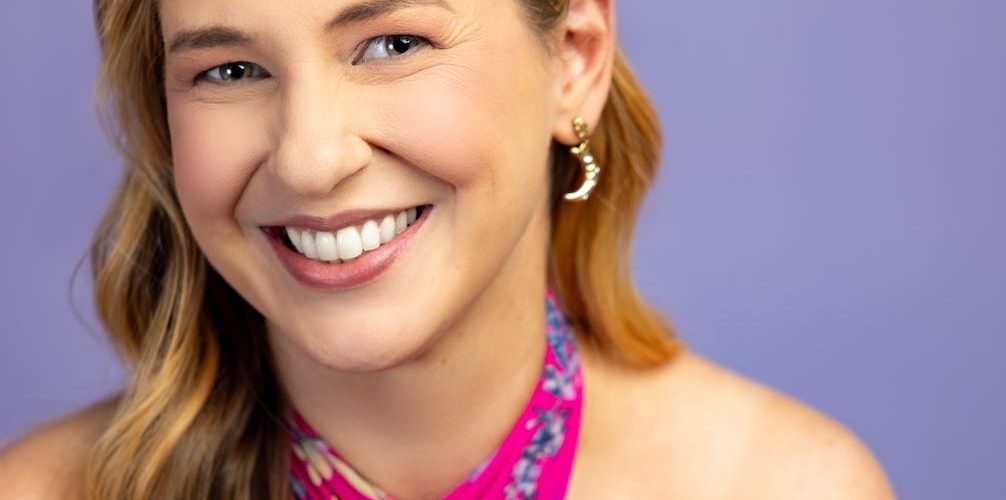
Find our Sentientist Conversation on the Sentientism YouTube here and the Sentientism Podcast here, episode 243.
Mari Andrew is a writer, artist, speaker, teacher, and needle-felting enthusiast. Her first book, Am I There Yet? is a New York Times Bestselling collection of observations from her 20s. Her second book, My Inner Sky, focuses on her recovery from illness back to a flourishing life. Her third book, How to be a Living Thing, focuses on human nature, inspired by living through the COVID pandemic.
In Sentientist Conversations we talk about the most important questions: “what’s real?”, “who matters?” and “how can we make a better future?”
Sentientism answers those questions with “evidence, reason & compassion for all sentient beings.” In addition to the YouTube and Spotify above the audio is on our Podcast here on Apple & here on all the other platforms.
00:00 Clips
“I saw these beautiful herds of cattle grazing under the eucalyptus trees and it was so idyllic and it just seemed so wholesome and so simple. And then I would just see these massive rows of the containers where they put the baby cows. And I realized, oh, okay, this is evil.”
“It’s not a sacrifice. We’ve always learned how to eat differently. Nothing’s being taken away from you. But I realized in actually writing this book that hierarchy is taken away. And I think that’s the scariest thing for humans to reconcile with.”
“My husband, he comes from a very middle America family. Traditional ideas of masculinity. He’s also an athlete. So, you know, there was always ingrained, oh, you have to eat meat to build muscle and all of that. He was the easiest convert ever. I took him to a farm sanctuary.”
01:07 Welcome
“It’s so, so wonderful to be here after years of listening.”
“The questions you ask are not questions that I get to engage with very often… I’m just really looking forward to grappling with some of these issues that have been on my mind since I was about four or five.”
04:18 Mari’s Intro
“I am a writer and artist and speaker and I’m just going to keep adding things… this has been such an experimental career, so far, in creativity.”
“It all began with questions… I started as an illustrator and I would post illustrations on Instagram every day. I amassed a really large following… asking questions about how do I navigate young adulthood in a meaningful way… silly observations about dating and friendship and living alone… the heart was, really what matters to me as a young adult, what makes a good life, what makes a purposeful, meaningful life.”
JW: “… all of a sudden, you had millions of people, reading and watching and enjoying your art…”
“I got to over a million followers.”
“…it was a time when social media was very democratic, but it was new… people treated it with a little more reverence…”
“… there was a moment when I realized, oh, social media is now for providing answers, not for asking questions… This is no longer right for me. So I wrote a memoir instead of posting…”
“I was recovering from a very serious illness and exploring my own healing… and then in 2020, animals started coming to me.”
“I’m sure this was such a shock to my publisher saying, ‘Oh, I’ve got this new book idea. It’s about animal behaviour.’”
“… right now, I’m in the season of animalness and humanness.”
“I’m in a really good, grateful place. Significantly fewer followers than I had before, but much more aligned with where I am and what matters to me…”
“’Is it harder to write a book?’… no, it’s so liberating because you can give so much context and you can really flesh things out. And if people are going to wilfully misunderstand you from there, that’s on them.”
JW: “… there’s some threads there around curiosity and questioning and creativity”
09:32 What’s Real?
“I grew up… culturally Christian… it’s less common in the US. There’s such a strong connection in in American Christianity between practicing religion and belief.”
“… I was lucky to have modelled for me that strong belief doesn’t connect so closely to how you practice.”
“I went to church every Sunday as a child… that was my family culture.”
“But my father was atheist or very strong agnostic and he would come because he really liked the intellectual grappling.”
“My mom was more attracted to the morality… ‘if I bring my child to church that’s the right thing to do.’”
“I definitely was born with the God gene. I just very inherently believed in God. And church was my way to ask big questions at an age when no one else was going to talk about those with me.”
“… When I was about four, I started asking, ‘Why are we here?’ and saying that that’s what I wanted to study in my life.”
“… I would think, I’m me. How do I know that you’re you? And the classic, is my red, your red?”
“I was an only child. I spent a lot of time by myself and I really liked being able to ask these questions at church. I didn’t get to do that at school. I didn’t get to do that with my peers.”
“Sunday school teachers would say to my parents, ‘you know, Mari could really hold her own in a theological conversation’. And I loved that.”
JW: “What was your experience like with the pastor… when you were asking these tough questions?
“…it wasn’t as good of a fit for me as it could have been… The church I go to now. I teach the little kids… I wish I had someone like me because I leave a lot of room open for doubt.”
“I always say… ‘we’re using our imaginations with this story. This isn’t history. It’s not science. This is a story…’ I certainly didn’t have that.”
“I grew up in the Presbyterian church which is a little more scholarly than others… the big evangelical movements which are a lot more emotional and dependent on people really feeling the spirit. It certainly wasn’t that. It was a lot more in the head.”
“… It was the 90s which was a time when Christianity in general in the US felt very threatened and felt like they had to defend themselves and find these facts like, ‘Oh, we found scraps of Noah’s Ark in Israel.’”
“It was confusing. I came from a very liberal or left-leaning family and I saw a lot of contradictions with what we believed at home and what was going on in the church.”
“I was not blessed with a lot of people who could really grapple with me. But at least I could ask the questions and I didn’t feel like doubt was the opposite of faith.”
“I had very severe OCD and I still do though it’s managed now.”
“…one of the subtypes of my OCD was called existential OCD and that’s the compulsion and the kind of need, like almost physical need, to know am I real? Is God real? Am I a good person? Like these questions that now I think are fun were actually very haunting.”
“… there I was, a mentally ill child who needed assurance and needed to figure this stuff out. But now it’s fun for me. Now it’s my sandbox.”
“… I never doubted God, which is interesting… because I doubt a lot of things.”
“… it was more the doubt that I was doing right by God… I would think am I a good enough person? That was a very common compulsion obsession… is God upset with me and am I doing enough to win God’s favour?… very medieval self-flagellation questions that no 13-year-old should have been asking.”
“But those questions also got me so fascinated by other religions and other ways of thinking.”
“I had that big sort of crisis when I was about 13… I’m studying world religions. I’m thinking for myself. I’m thinking outside of my family’s values. And it actually got me a lot deeper into religious interest… I was really interested in Islam. And it didn’t threaten what I thought about Christianity. It actually enhanced it.”
“… it was just hard to have this idea of churches being so contained. And I felt like my experience of religion was so broad.”
“… studying medieval philosophy in college and learning so much about other religions, I was really fascinated with interreligious dialogue. So, I thought I was going to solve the Middle East problems and learn all these languages… it just kept bringing me into a broader, richer experience of life…”
“The darkest times of my life added more spiritual dimension than they took away.”
“I learned more about what was going on internally for me spiritually, but it was such a hard tension… I can’t call myself Christian because I don’t relate to any of these people… I don’t I don’t know what I believe… I like practicing this, but belief doesn’t have a lot to do with it.”
“I thought pretty early… this is a myth and I’m okay with buying into a myth.”
“We buy into all kinds of myths… money probably being the best example. We don’t have a problem with a myth not being factual in order to follow it or believe that it’s true.”
“I think myths, while not factual, are true in the way that poetry is true, literature is true.”
“That has influenced my relationship with science as well… I don’t need a fact to know something is true.”
“… science right now is in this very rigid stage where it’s so in opposition to myth and to subjective experience when really that hasn’t been the case for most of human history.”
“I feel very comfortable believing in things that don’t have hard evidence because I just see evidence differently.”
JW: “Would you say you believe in God now as a factual existing phenomenon or would you say you believe in the network of myths around God and enjoy practicing their implications and see the links between the myths of different religions and how they might have common ground?”
“I don’t know if God is real and no one does… I would say I say I believe in God but I that doesn’t feel accurate. It’s like I trust in my own experience of exploring that concept in a really meaningful and impactful way in my life.”
“But what I always say about like my personal relationship to religion is that they’re all true and none of them are true.”
“I don’t know if God exists… it doesn’t feel very relevant. So, now I would say maybe I’m more of a universalist where I kind of take from many different traditions to form how I live.”
“But as far as we know there is no evidence for God…”
“I think my greatest evidence that we don’t know is that so many people don’t believe in God. And you would think if God existed that there would be more of that inherent feeling.”
“Plato would say that when we see something good and beautiful, it reminds us of something that we’ve experienced like before we were born. And that is like a reminder of God.”
“As someone with OCD… It’s taken a lot for me to get to a point where I can say I don’t know and feel okay about that.”
“I believe in myth. I don’t see it as an opposition to science…”
“I’m very interested in death stories and people will say you see this bright light and it’s like heaven opening up… there are plenty of scientific explanations for that… neurons, synapses, whatever goes on in the brain during the shutting down of the body and it can look very bright. I don’t see that in opposition to heaven opening… They both make sense to me and I don’t see I don’t need to choose there.”
JW: “a naturalistic approach… It’s about following the evidence where it leads. It’s about doubt. It’s about even big questions like does God exist or is my religion true? Nothing’s off limits… We keep asking the questions. So I think you do that… you probably add in some more deep-felt sense emotional experiential stuff than I might… I might be a bit more sceptical about that than you.”
JW: “There’s two reasons I think that naturalistic approach is important. One because I think it gives us the best chance of understanding the world and if we want to make the world better you want to understand it accurately…”
JW: “… if you’ve got inaccurate beliefs about the world even good people can do terrible things… there’s another risk… sometimes supernaturally inspired worldviews, partly because they can lead into quite dogmatic fixed beliefs that are arbitrary, maybe they’re not connected with reality at all, can then lead into some moral problems”
JW: “How did you think about the moral implications of different varieties of religion?”
“That’s the hardest part… the most challenging part of my inner spiritual dialogue.”
“The first people had this relationship with the sunshine, the sun, and it kind of developed into worship. But at first it was just like, ‘wow, that that’s our source of power, you know, it’s amazing.’”
“… that’s so influential to at least the monotheistic religions. And I really get that. I feel like yes there is a source. There’s a source of love, life, creativity that is beyond me…”
“… how that affects morality, that’s where I get really sticky and one thing I think the Christian church does a mostly terrible job of is morality around Sentientism.”
“I can’t believe how much I see of Christian social justice, which is really beautiful and very grounded and very simple and straightforward, you know, feeding the poor… But then there’s no discussion about animals and no discussion about a lot of humans… I’m thinking of people with severe disabilities.”
“… what if okay, if God loved dinosaurs as much as God loves people, which I believe, why would this horrible thing happen? Or why would Jesus be a fisherman? Like God would know how much fish suffer. So why?”
“… then I think my morality is based on something different because the Bible isn’t really helping me out here.”
“… that’s the part that is the hardest part for me is figuring out my moral framework as a spiritual person. The two actually don’t seem as connected as one would think.”
JW: “So, you’re not you’re not in a position of taking the Quran or the Bible and going, ‘Here’s the list of rules. Therefore, this is good and this is bad.’ It doesn’t feel like you’re drawn to the divine command idea of ethics where there’s no real good and bad. It’s just doing what you’re bloody told.”
JW: “… as I study different religions… there is there is so much good there… ideas of universal compassion and love and helping the disadvantaged and the golden rule… doing unto others… loving thy neighbour…”
JW: “…but then depending on the interpretation and the variety of the religion you then bump into these situations where that universal compassion is no longer really that universal… it’s actually brutally conditional… Because as soon as you break the rules, maybe you’ll burn in hell for eternity. Or even if you never found out about the rules, you’ll burn in hell for eternity… this seems a bit dodgy for a perfectly benevolent, morally perfect god. Why did you create hell in the first place?”
JW: “Or, as you were saying, the unthinking exclusion of non-human animals or non-model humans? If you’re a human that doesn’t believe the right stuff or you’re a human that isn’t the right sex or gender or doesn’t have the right sexual preference or if you’re human that has the wrong ethnic background all of a sudden things look a little bit bleak for you…”
JW: “… that’s part of the challenge of understanding this dazzling variety of different religions… there’s some really good powerful stuff… but there’s also a lot of really bleak nasty shit that people struggle to give up because they’re locked into quite a dogmatic worldview.”
“It’s been very challenge challenging my whole life with the Christian ethical framework…I’ve just chosen to not believe in hell, not believe in any of the scary stuff from a really young age, by again, growing up in a… very left leaning family.”
“Never had a problem with sexuality or any of those things that especially came up in the 90s in the US, this very moral reckoning that we had which was kind of embarrassing.”
“… stepping into a church that is so social justice oriented. A straightforward relationship… if God is love and created the world of love then we love all these beings and welcome the immigrant… all of these beautiful ideals… and then they have barbecues with their animals…”
“That’s where I’m like… Is there another framework I can borrow because this one isn’t doing it for me?”
37:08 What Matters?
JW: “A snarky atheist might say… you and these socially progressive Christians are just cherry picking… If you want to evaluate the Bible, you’ve got to take the bad with the good.”
JW: “Cherry-picking can be good. If you’re picking out the good bits, this is awesome… But it does lead to the question of, okay, so how are you choosing? How are you and the socially progressive Christians choosing? If the basis for your morality isn’t the Bible as a whole, what is guiding it?”
JW: “…you’ve answered it in a sense because it’s, you know, if God is love and compassion, then that’s the core… is that where it comes from or… do you actually have an independent morality as well?… if you woke up tomorrow morning and you’d had some sort of revelation or you read some book or you’d thought things through… there’s no God at all… what would be left? Would you still have a distinct felt sense of good and bad and right and wrong?”
“… a lot of people in my position, moving away from the church but still holding a lot of those same values or structures… will say source to mean God. So source of life, source of love, source of creativity. I really resonate with that.”
“I also love in Christianity the embodiment of God as a baby and someone who died. I think that’s a really beautiful myth no matter what.”
“I can imagine my morality without God, as most people think of God, but without that kind of higher power it is really challenging… I’m going to think about it…”
JW: “… it feels to you like there has to be some original source that’s way beyond you. It can’t just be something that comes from within?”
“This is my question about Sentientism… I am coming from a more spiritual paradigm and world view… is a dead body worth caring about because it’s not sentient? I would say yes because it doesn’t feel but there’s a spiritual significance to that being, that entity, that thing.”
“So, when I think about animals, there is a spiritual significance that I think they have, as in they were, created is a really strong word for what I mean here… they are infused with worth, inherent worth, inherent preciousness, which I think goes beyond just caring about them.”
“There’s… a sacredness to all sentient beings, which I think goes farther than Sentientism or maybe less so?”
“I’m really fascinated by atheist ethics. Every Lent… I take a class called Atheism for Lent by a wonderful philosopher, Peter Rollins… I’m really fascinated what ethics look like outside of a spiritual world view. But it is really challenging for me.”
“… if tomorrow I woke up and I no longer believed in God, would I treat people or would I treat beings with the same reverence? I don’t know… it’s a practice and it’s a devotion… seeing God in others is the big thing about Christianity.”
JW: “One thing about sentientism is it doesn’t say we can’t care about insentient stuff. It just says we should care about all the sentient stuff. So, you could go beyond and think about dead bodies… I’m personally quite strict in that I struggle to see the direct moral significance of anything that doesn’t have their own experience. So, to me, a dead body is no longer a moral patient, just as, the bones of someone who died 100,000 years ago is no longer a moral patient. They can’t be harmed. They can’t be benefited. They can’t be impacted in any way whatsoever.”
JW: “But, of course, I wouldn’t treat a dead body with disrespect because… some inbuilt felt behavioural stuff… but more technically… out of respect for the family, the friends, those around us… the significance and the symbolism of the dead body for the living sentient beings… in practice we’d probably end up behaving in a very similar way even though from different positions…”
JW: “Maybe the same is true with sentient beings, because for me, in a worldview that doesn’t have any spiritual or supernatural stuff in it at all… the moral pull, for me, is because that being values themselves and their own experiences. They have their own interests, their own perspectives. So, almost by definition… if I want to call myself moral I have to care about what matters to them… that’s the moral link.”
JW: “… they have sentience, with no need for soul or sacrality or anything else… whereas I think your sense is that there is something imbued into them… I don’t know if you’d use the word soul.”
JW: “Maybe we practically end up in some pretty similar places in the decisions we take but it’s a different flavour of describing how and why those beings matter. One is because they’re imbued with something sacred and the other one is because things matter to them so I should care about them.”
“… There’s this tendency that I have… where I think about imbued goodness or I think about imbued preciousness… a sort of there’s an inherent beauty. There’s an inherent good to living things.”
“… then you meet people and even animals and you think of animals as the purest beings… and they’re just ruthless… in so many species no care for others… complete selfishness. I see a lot of parallels.”
“I’m really interested in disability ethics and I used to work with people with intellectual disabilities like Down syndrome or foetal alcohol syndrome.”
“… people would say, ‘Oh, they’re angels, they’re pure and childlike.’ And like, no, a lot of these people sucked. Like, they’re selfish and they’re mean, and some of them are really nice, just like every human.”
“I think sometimes what’s really hurting Sentientism is that people believe… how could I hurt a kitten? How could I hurt a puppy? They’re so pure. They’re sweet. They’re loving toward me. But there’s a lot of animals, like rats, which I’m fascinated by, who are not that way. Do they deserve any less?”
“So many of our social progress movements have been argued for by saying, ‘Oh, but you know, these people are so good, so we have to treat them well.’ We’re seeing that with immigration right now. Oh, but, ‘they’re not just bad people’ like our president would say. There’s people who are hardworking. There are people who want what’s best for their family… But a lot of them don’t because humanity is complex. And do they still deserve rights? Yes.”
“So, we get kind of hung up on this, ‘oh, if it’s a good person or a sweet animal, oh, cows are so loving, cows are just like big puppies.’ But what about chimpanzees or baboons… better examples of, you’ve evolved in a really weird, bad way… you’re still deserving.”
“I think religion, there’s so much tied in to goodness and a certain standard of morality, whereas atheism says you’re sentient. You deserve care. And that’s something I very much am interested in.”
JW: “I prefer a sort of justice approach that is actually quite sceptical about whether things like free will and agency can even exist… it would take modern conceptions of justice and keep most of it intact but strip out the retribution… this urge to just hurt someone because they did something bad… but I still feel the retributive urge.”
48:52 Who Matters?
“It goes back to quite early in my life, university era, where I learned about liberation theology in Christianity… a movement that developed in Latin America in the 60s and was really influenced by Marxism… the idea that God has a preference for the poor and God’s favourite people are poor people.”
“I have not incorporated this belief into my own inner world… [but] it’s definitely influenced how I think about who matters the most.”
“… the more oppressed and the more impoverished in any way that a person is, the more favour God has for them, the more favour love has for them, the more we should love them… Jesus says this in the beatitudes, blessed are the poor…”
“… the only part of the Bible that I 100% believe as both fact and truth. Even if Jesus didn’t exist, it’s a really great, wonderful poem… Pretty good way to live, I would say, for anybody. Talk about cherry picking.”
“…that started a big love affair with social justice, which now I’m rethinking in a lot of ways, but that was really my core morality.”
“… that just so easily transferred to animals because I saw them as the most oppressed beings”
“I actually became vegetarian when I was 13. I was given a brochure at a street festival from PETA and it was those ghastly images and I just couldn’t do it.”
“… animal welfare is maybe the only issue where shame actually works to get people to change their minds because it’s just so unbelievable, what we think is okay.”
“… my parents were big animal lovers. My dad was vegetarian since he was a teenager as well. So that was normal. But my parents were divorced and my mom saw my dad’s vegetarianism as just another annoying thing about him that she would have to tell people… it was this big ordeal.”
“… we lived in Seattle, which is a very left-leaning blue city, very environmental forward. We had a ton of health food stores. It wasn’t crazy. But I think my mom really saw it as this inconvenience… ‘now I’ll have to tell people Mari’s vegetarian… this is a social kind of taboo’… we actually had quite a bit of argument about it… now she’s the biggest animal lover.”
“… it was actually challenging and I was very shy at that time… having to assert myself… was hard… it led to me doing so much research on vegetarian friendly restaurants and the slow food movement.”
“I got excited about food policy and that led me to locavore, you know, eating within a radius of my house and getting really into seasonal produce… it was such a joy for me.”
“I’ve really tried to keep that pattern in other issues that I get involved with of keeping the joy and the exploration…”
“… the ability to tell people, ‘Oh, try this lentil dish. It’ll change your life.’… rather than focus on the hardness of it or the martyr sacrifice, which is another tendency I have in OCD, is take on the weight of the world and be the martyr for these things.”
JW: “I had a very slow, painful path to coming to the animal issue… I was a vegetarian from my early 20s… it came from pretty much the same ethics as I have today… but there’s something particularly visceral about putting pieces of a dead animal, flesh in your mouth… there’s something distinctive about vegetarianism…. at the time for me it was also a social calibration because veganism was really weird but vegetarian was just weird… I sort of knew about dairy and eggs and wool and leather… animal exploitation… and the fact that all of those [animals] end up in the slaughterhouse as well… It’s not just the meat products… But I pushed it to the back of my mind. And used all the cognitive tricks… to try and avoid the topic…”
“One of the ways that I really healed from OCD around food… a sort of eating disorder… was finding joy in food.”
“I was vegetarian still… getting into this slow food, local movement… I was fascinated with family farms and I really bought hard into that.”
“… it’s the most tempting [story]… it’s beautiful… you see on the milk carton these pictures of beautiful happy cows…”
“I always kind of held it as a point of like social pride. When people would say, ‘Are you vegan?’ I’d say, ‘Oh, no. I would never be vegan. I love cheese… Don’t be ridiculous.’”
“… many people didn’t love the membership dimension of veganism… if I joined that then so much is taken away from me”
JW: “It’s a club. It’s an identity. It’s a club that if you join you can never leave and if you do we will we’ll come after you [/s]”
“That was the story of my movement away from a lot of social justice things that I was involved in because it was too much of an identity and no one is perfect and there was such a high standard of perfection. It felt more evangelical than churches, more dogmatic and scary…”
JW: “It can slip into becoming a little bit performative and more about the virtue of the individual rather than compassion for the victims… there’s some echoes there.”
“It was much more about the standard that individuals were holding themselves to… I think they got a little away from the compassion.”
“So, even to this day… I don’t announce that I’m vegan. I say I don’t eat animals or animal products because I also want to normalise not saying ‘meat’, but saying ‘animals’. I don’t eat animals or I don’t take from animals.”
JW: “It’s a tricky balance… sometimes I find myself edging away from the V word… Partly because I want to have a chance to engage people in a productive conversation and then I can beat them over the head about veganism, once they’re sucked in. But at the same time, I also want to completely normalise veganism because it is very simply a practical philosophical stance against the exploitation, harming, and killing of anyone. And who could object to that? I mean, nearly everyone, in theory, already agrees. It’s just the practical bit…”
JW: “How do you play the game and tell the story with integrity and with respect for others, but also without the sort of sticker shock of this identity that can feel like a cliff you’re asking them to jump off?”
“That’s something I wrestle with a lot is how do I invite people into this information that I have? How do I make it welcoming? How do I empower them to make their own decision because that’s the most important part of their journey… but it’s so hard because I know so much and I’m so passionate about it.”
JW: “it’s a deeply important issue, right? If you thought about some other sort of ethical abomination that was being done to humans, no one would feel a hesitation about talking about it. It would be an imperative to talk about it.” And we’re in this position where society presses us to be polite and subtle and hint… do you not see!?”
“I find if I talk about even the most delicate animal welfare issue in front of people’s children, they’ll say, ‘Oh, don’t say that’ or, ‘Oh, the chicken that you eat isn’t the chicken that you saw on the farm’… Talk about preserving a myth.”
“…we have to really dance around and make people feel comfortable…”
“I was very hesitant for a long time, mostly out of ignorance, honestly. I just didn’t know. And there were years where I was really involved in the food justice community and I had no idea that cows had to have a baby in order to produce milk. I didn’t know.”
“… and that’s a great use of evidence, hard evidence, science. That’s not something that I think is best argued with subjectivity and storytelling… it’s a cold hard truth.”
“And I was so enamoured for so long with these family farms. And I remember driving through California, land of the happy cows, and it was so beautiful. And so, I saw these beautiful herds of cattle grazing under the eucalyptus trees. And it was so idyllic and there were these farm fresh stands everywhere. It just seemed so wholesome and so simple.”
“And then I would see these massive rows of the containers where they put the baby cows. And I realised, oh, okay, even in the best possible situation, this is evil and there is nothing that makes it better.”
“I really had to sit with myself about that because it wasn’t easy.”
“… with animal rights, animal care… a lot of people think, ‘Oh, that’s taking something away from me. If I care about animals, if I give them rights, it takes something away from me.’ And I always thought, well, what are you even talking about?
“It’s not a sacrifice. We’ve always learned how to eat differently… nothing’s being taken away from you.”
“But I realised, in writing this book, that hierarchy is taken away. And I think that’s the scariest thing for humans to reconcile with.”
“I’m very connected to a more indigenous view of Christianity. So, the Celts are a perfect example. An indigenous group who incorporated Christianity into their pagan beliefs that were much more about the sacred feminine, the sacred earth, the sacred animals, rather than the Roman Empire which was all about hierarchy and putting things below people.”
“… it’s women down, animals down, earth down. And an empire doesn’t work without hierarchy. And people are so insistent on maintaining hierarchy.”
“… it’s so hard, I think, for people to humble themselves… or to say, ‘Oh, an animal matters more than my momentary pleasure.’”
“And that’s hard. It was hard for me. It was hard for me also as someone who identified so strongly with being a joyful person who took joy in the pleasures of food, in the pleasures of travel, and ‘how can I travel and not experience the food of the culture?’… and then it dawned on me ‘oh, there are vegans in every country… I can experience the culture in so many ways.’”
“It was very hard. It was threatening to my identity, threatening to my ego hierarchy, and it was threatening to my idea of ‘can I really enjoy life on earth without these earthly pleasures?’”
JW: “And most of those cultures you were traveling through are probably much closer to veganism than the place you came from. This idea of western industrialised animal exploitation is a is a remarkably modern idea.”
“I think the best foods from any culture are the vegan foods and they’re usually the most traditional from the farthest back. So yes, it’s been a happy journey from there.”
JW: “… the idea of it being a sacrifice is interesting because… there are some genuinely challenging links between all sorts of food restrictions, and some food related behavioural disorders and you need to treat those very seriously. But in general… giving up animal products from your diet is as much of a sacrifice as giving up kicking puppies for fun is to your leisure life.”
JW: “… then you layer onto that what you’ve just explained, which I think is a remarkably common experience… ethically, people just feel a release and a freeing and a joy… we know we’re not perfect, but we’ve given up a massive chunk of cognitive dissonance… And just that can feel awesome.”
JW: “… then, even practically… for a lot of people, their food budget drops and they’re opened up to a whole new way of living, just the sheer variety of different food types and things that they never really explored before.”
JW: “… the irony of people complaining about restricting our diet by cutting out animal products when they only ever have three meals each with a bit of flesh in the middle…”
JW: “… sacrifices can be good when they’re done for a good reason. And when they’re done for a good reason, they can be joyful and wonderful and freeing and an opportunity.”
“I’ve seen the most joyous transformation in my husband. He’s vegetarian, and he’s having some trouble getting there, which I understand… he comes from a very middle America family. Meat, pizza, that’s what he ate. Very traditional ideas of masculinity… men eat meat… and he’s also an athlete.”
“… he was the easiest convert ever. I took him to a farm sanctuary, and he met a cow for a moment, who wasn’t even a very amenable cow… And he said, ‘I’ve eaten my last burger. I can’t live with myself.’”
“He was never a cook. And now he’s been cooking the most beautiful vegan, mostly vegan food. He doesn’t even need the cheese or yoghurt. And his creativity has exploded… his joy in the kitchen, his self-empowerment of ‘now, oh I can cook for myself flavourful, beautiful, exciting food that I really look forward to.’”
“It’s like the ultimate example of how much can come into your life from a relatively simple sacrifice.”
“I know it’s so loaded with culture and socialisation and all of these things. I don’t want to minimize that… but yeah, it’s one of the best things I think he’s ever experienced in life.”
JW: “… it’s a very it’s a very cool complement between you at 13 years old seeing that horrific scene on a PETA pamphlet… and him getting to spend time with a cow living the life they want to lead… that’s a wonderful and again joyous, more compelling vision… the potential life of each these animals… do what we all want to do, to lead a long happy life with our families.”
1:11:01 A Better World?
“I have a plan. I am interested in exploring it with you.”
“I love what you said about creativity… one of my sort of core insecurities, especially in my creative life, but probably everywhere, is not being taken seriously.”
“And a lot of that comes from my relationship with spirituality. I’m really attracted to academic spaces. I really love intellectual grappling, but I feel very left out of those spaces because I have a kind of unshakable spiritual core which affects so much of what I think.”
“… plenty of academics are religious but I’ve just felt the tension…”
“… If we want to continue the therapy session, with my dad who was an extremely intellectual very smart linguist historian philosopher who really was upset by my spiritual proclivities. It really upset him and triggered him… He did not really approve of it.”
JW: “…why did it upset him?”
“I think, because he had so much trauma with the Catholic Church and he was just horrified that I would be participating even though… he brought me to church when I was little.”
“I don’t think he thought it would stick as I got older and actually became kind of like really into it…”
“I’m going to be a parent in less than two weeks now. I’m giving birth… So, I’m thinking a lot about the future, what I think a future world would look like.”
“I know how easy it is to project onto your children and you want them to share your values.”
“So, in my creative work, a big insecurity is that, oh, well, I started doing these little doodles and it’s very feminine. It’s very DIY. I’m not painting. I’m not oil painting. I’m not doing these academically approved ways of communicating. My writing is very playful. I like to be funny. I like to explore. I don’t like to have a definitive take on things.”
“But I also realised so much of what I do kind of looks childlike. And I have grappled with that a lot. And where I’ve come to is actually really inspired by the Baha’i faith.”
“The idea that… many people are prophets in their own way… to spread a message of love and people receive it in different ways.”
“Jesus, at his time, he said it to a specific group of people who would receive it in that context.”
“And I thought, ‘… the way that I draw, because it’s not very sophisticated, is probably more accessible to a lot of people than more academic stuff.’ Or if I add illustrations into my books, maybe more people will warm to it and therefore warm to my message that I’m really trying to connect with them.”
“I’ve had to gather confidence in myself, knowing that I have been really influenced by the most accessible, happy ways of transferring knowledge.”
“It doesn’t have to be so mental. It can be very visceral. And even with the church, something that I think is so embarrassing about Christianity is this compulsion to make it science-like post enlightenment… you know, ‘we found Noah’s Ark.’”
“Just go back to where you were in the medieval era when it was all mystery… It was just experiencing mystery and experiencing the world and I think… why is Christianity needing to be taken seriously by atheist academics? Why can’t it be confident to be its own thing?”
“I’ve seen myself have these crises where I think… ‘Are intellectuals going to engage with me? Are men going to read this? Are people who have the stamp of authority, of approval, going to not think that I’m being silly?’”
“I’ve had to do that work. But I also realised, the book I wrote, it’s not a call to veganism from an academic perspective, but maybe someone will look at a rat a different way.”
“That’s accessible, and that can lead to changes that are so beyond my understanding and you just never know what your ripple effect will be.”
JW: “I want to give you another argument even from a sort of brutally hard-edged scientific, naturalistic, sentientist approach… I have quite a sort of analytical style and I think about priorities and I think about really important outcomes… so, sometimes I can feel this thing in my head when I see things that are aesthetic or creative or just enjoyable… whether it’s a TV series that is about nothing really… I can be like ‘look we’ve got problems to solve we don’t have time for that – it’s trivial, we’ve got lives to save’”
JW: “[but] hold on – if my philosophy is grounded in the moral salience of sentient beings and part of that is valuing what they value… something like your Instagram account has generated millions of minutes, if not hours of dazzling points of joy in the lives of millions of sentient beings. And that’s awesome… what a thing to aspire to… even if there wasn’t a message… which of course there is! There’s messages and values and stories in there as well… Even if it was just fun… that’s important.”
“Providing a pig with a toy is not less important than food and shelter.”
“…if I think about my dream for a better world, so much of what I learned writing this book was how much embodiment, so being a body… connects us so much to our animalness.”
“And it is when we disconnect from our bodies and we believe self and body are two very different things that we cause the most suffering.”
“I just now go through the streets of New York thinking who designed this city for human or animal bodies?… This is for robots really.”
“… So many of the traits in both humans and animals that we think of as problems are because the world isn’t designed for bodies and taking care of bodies and not using bodies for our own needs.”
“… in Massachusetts, there’s a historically deaf community… There’s a lot of deaf people in one area… they’ve created this kind of deaf utopia where buses don’t have horns. They have other ways to signal. And the community is set up for deaf people to access society in every facet. And then deafness isn’t a problem. it’s just part of the community. It’s an easy thing to navigate. And in fact, in many ways, it’s preferable to navigate.”
“So, my vision for a world is a society that really honours the body. Because then I think we’re not looking at animal bodies as something but someone.”
“We’re not looking at being in a wheelchair as a problem, but as something natural, something normal, maybe even something inevitable.”
“And we’re not looking at barking dogs as a problem to solve. Or we’re not looking at pigeons and rats as an urban problem to solve, but just a natural part of our existence.”
“Eliminating that hierarchy of who gets to be in society in a meaningful way and who doesn’t.”
“…I think pretty hand in hand with that is honouring the gifts and the skills of all people… and some of us make simple doodles and some of us are academics and we need all of it… eliminating the hierarchy of who gets to talk and who doesn’t. That would be my dream society.”
JW: “And the patterns of your books are interesting… Am I There Yet and My Inner Sky are partly about your own journey… people might see that in a self-help context because it’s helping them think about how to lead a life and meaning and purpose and some of the deep stuff we’ve talked about today.”
JW: “In a way you frame the new book How To Be A Living Thing in that same context because it’s saying we can learn from nonhuman animals, but at the same time… you’re also hoping that helps people feel compassion and empathy for them.”
“[How To Be A Living Thing] It does look different from the other two, but it feels like such a natural continuation… there’s so many people who have been on your podcast who have had many lives, many chapters, and done many things. That’s something I admire so much in people… it’s undervalued in society.”
“We really value consistency and one of my big mission cries of this book is that consistency is not natural.”
“… it’s never a big pivot to change your morality or the way you approach the world, your world view. It’s actually very natural as you get older and have more experiences.”
“And there’s no special badge you have to have to get into animal welfare… It can start with a really gentle and joyful curiosity and yeah, there doesn’t need to be such a severance from your previous life.”
“It can be a really natural continuation of curiosities that you’ve probably had since you were really little as most of us have this inherent knowledge that animals are deserving of care at a young age and then that’s conditioned out of us.”
“So yeah, never too late to join in the conversation.”
JW: “I’m always encouraged by how many really high profile people actually do care deeply about non-human sentient beings. But very many of them, despite their profile and their power and their status, still feel constrained by the pressures we were talking about earlier on such as that they don’t really want to talk about it… I understand, but it’s a missed opportunity. So, it’s absolutely wonderful to have someone with your audience and your reach and your influence writing a book like this and talking so openly about how you feel.”
Follow Mari: